
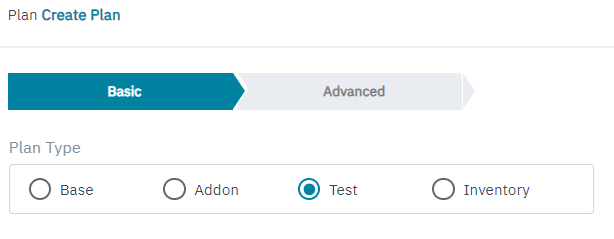
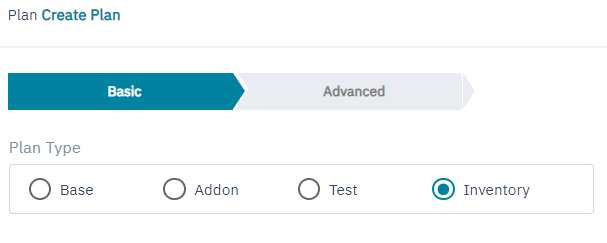
-
Select State Transition Rules and click on Add Rule for adding next state rules for OEM test plan.
2. After clicking on Add Rule following screen displayed.
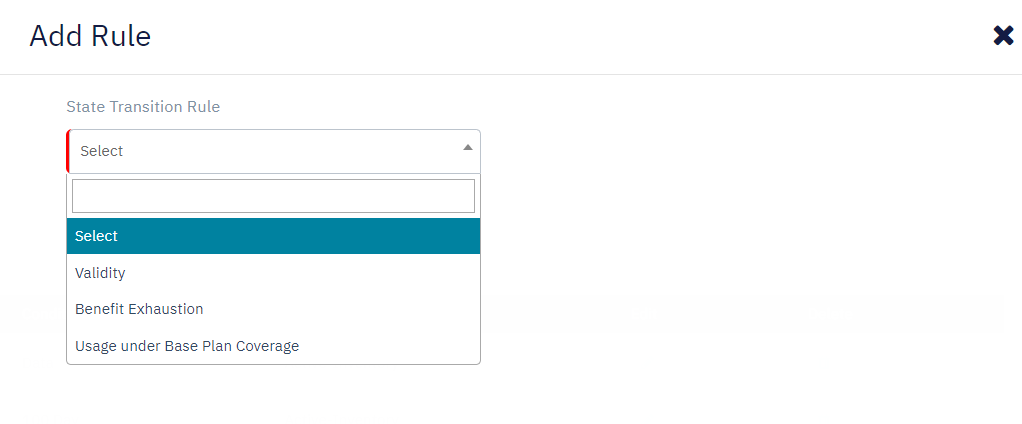
State Transition Rule has three values in the dropdown.
-
Validity - OEM endpoints state transition and change of plan from Test to Inventory plan happens based on the validity specified.
-
Benefit Exhaustion – OEM endpoints state transition and change of plan happens based on the usage of specific benefit exhaustion.
-
Usage under Base Plan Coverage – OEM endpoint state transition happens when a charging request initiates from an operational (Base plan) coverage.
3. Enter or select the following information in the corresponding fields. Fields marked "|'are mandatory.
Based on the state transition rule selection following fields appears.
Validity
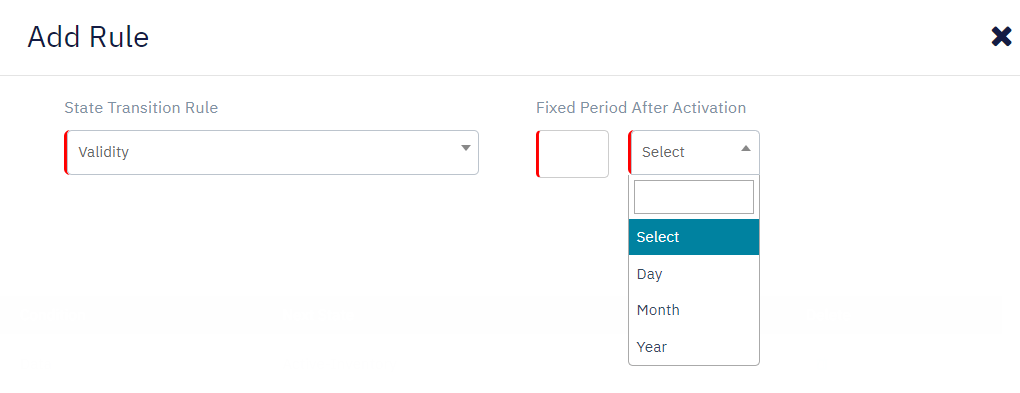
When you select State Transition rule as "Validity", the following fields are displayed
|
Field |
Description |
|---|---|
|
Fixed period after activation |
There will be two sub – fields for fixed period after activation.
|
Benefit Exhaustion
When you select State Transition rule as "Benefit Exhaustion", the following details are displayed.
|
Field |
Description |
|---|---|
|
Plan Benefit Exhaustion |
SMS, Data and NB-IOT will be listed in the dropdown.
|
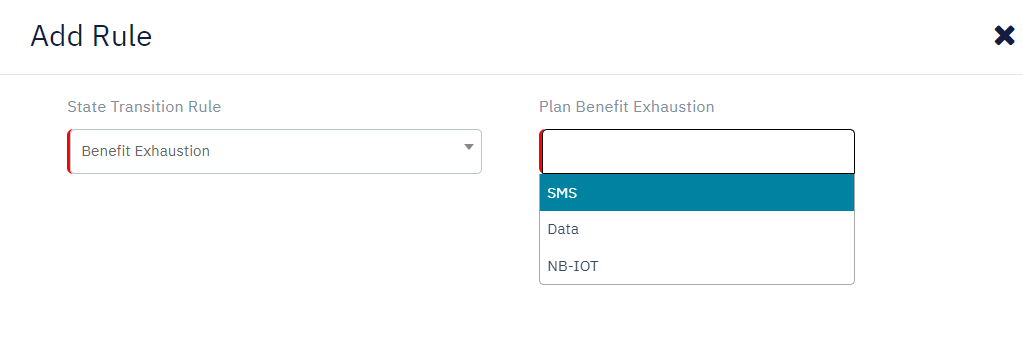
-
Configuring Data, SMS and NB-IOT benefits and Data as benefit exhaustion rule is allowed.
-
Configuring Data, SMS and NB-IOT benefits and SMS as benefit exhaustion rule is allowed.
-
Configuring Data, SMS and NB-IOT benefits and NB-IOT as benefit exhaustion rule is allowed.
Usage under Base Plan Coverage
Select usage under base plan coverage as state transition rule and click on add.
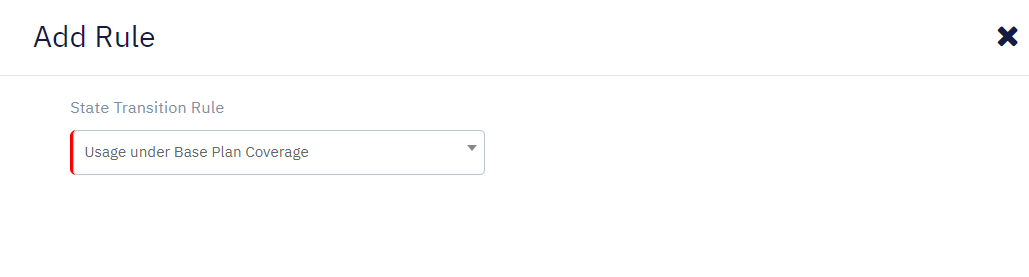
4. After clicking Add following screen appears.
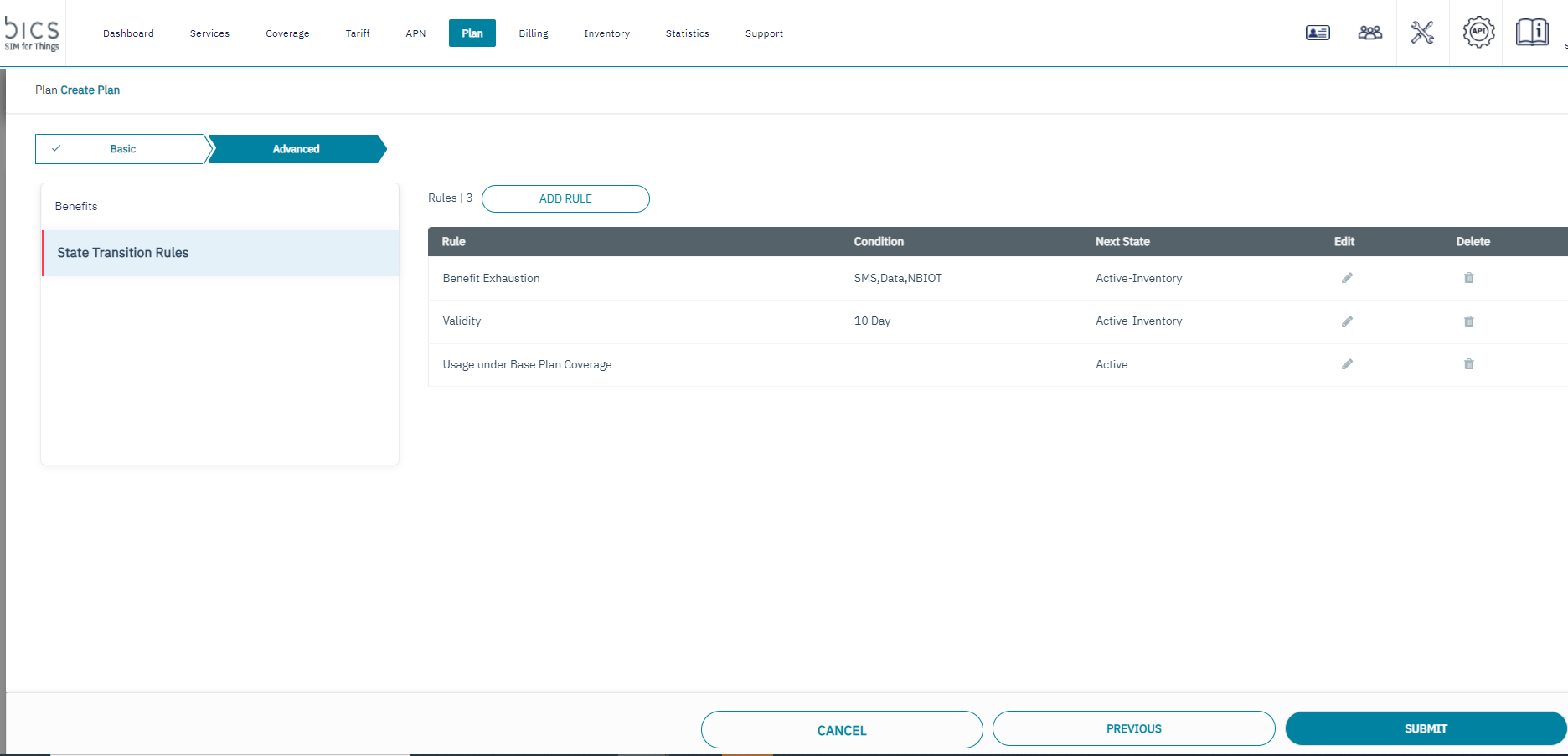
After adding State Transition Rules, the following details are displayed on the screen.
|
Field |
Description |
|---|---|
|
State Transition Rule |
Indicates the state transition rules added.
|
|
Condition |
Indicates the condition of each state transition rule
|
|
Next State |
This field will be automatically populated based on the rule creation.
|
|
|
to edit the Benefit Exhaustion, Validity, Usage under Base Plan Coverage details. |
|
|
to delete the Benefit Exhaustion, Validity, usage under Base Plan Coverage rules. |
5. Click Submit.
A confirmation message is displayed, indicating that the OEM Test plan is created successfully.
6. In the OEM Test Plan without adding state transition rule if submit button is clicked, we get a warning message. Refer to the following screen.
-
If no state transition rules configured in the test plan, then endpoint state change must be performed manually.
7. Both Benefits and State Transition Rule – 'benefit exhaustion' should match with same type of benefits if not OEM Plan creation will not be success. If there is a mismatch in benefit type gets an error message. Refer to the following screen.